

August 31, 2026
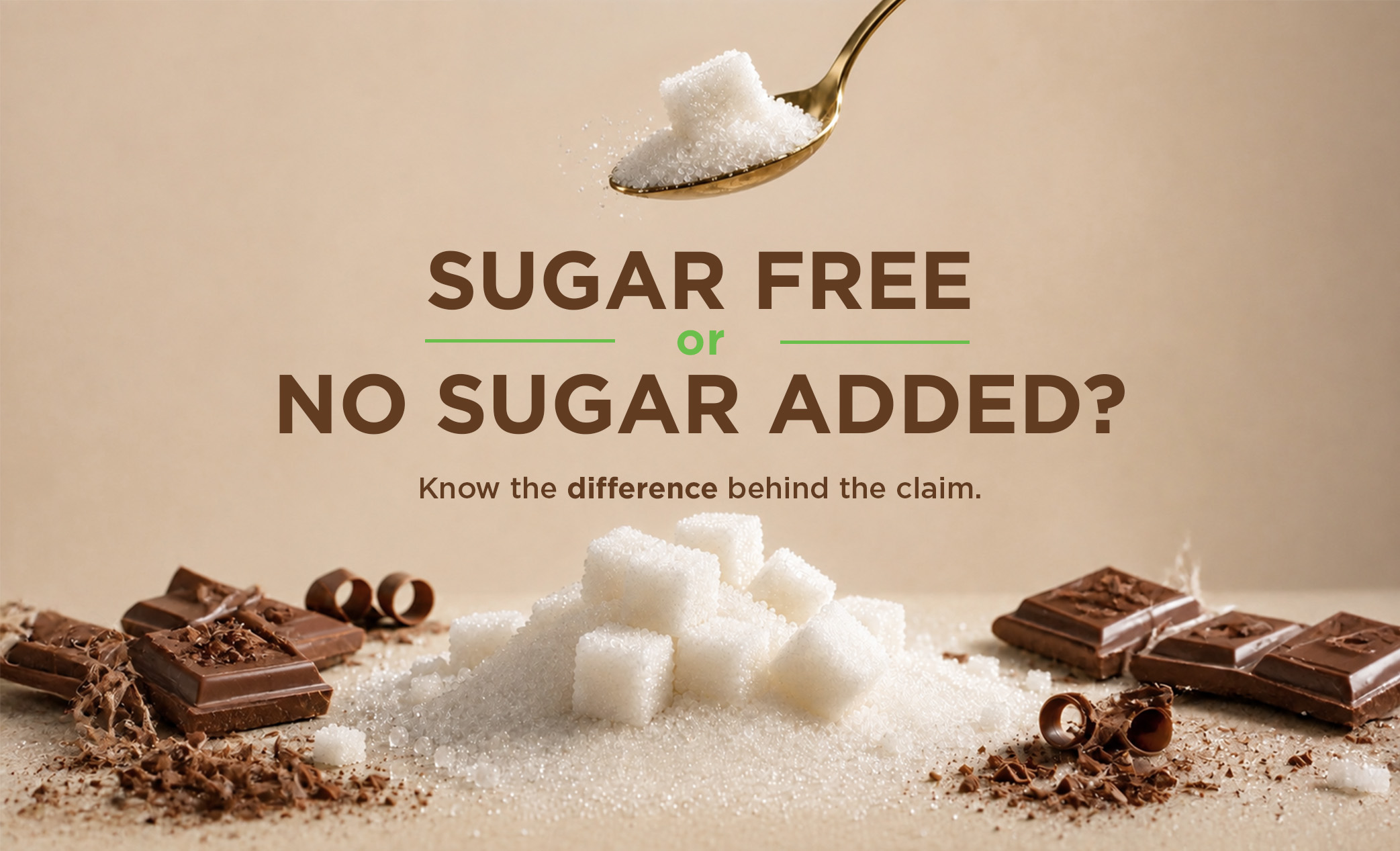
No Sugar Added vs. Sugar Free: different claims that define your chocolate
In the development of a chocolate formulation, each technical specification directly influences the positioning and claims the final product can communicate. Two concepts that often cause confusion are No Sugar Added and Sugar Free. While they may seem similar, they follow different criteria and require specific formulation approaches. Understanding this distinction and working with the right formulation partner are key to selecting the right solution based on each product’s objectives.
It All Starts with the Formulation
The key lies in understanding the focus of each claim:
- No Sugar Added: refers to a formulation in which no sugars or other ingredients used for sweetening purposes are added during the manufacturing process. Any sugars present in the product occur naturally in its ingredients, such as milk solids or cocoa mass. Therefore, this claim is primarily linked to the formulation approach and does not necessarily mean that the final product meets the requirements to be declared Sugar Free.
- Sugar Free: refers to the total sugar content of the finished product, considering both naturally occurring sugars and any other sources included in the formulation. To use this claim, the product must comply with the limits established by the labeling regulations applicable in each market. Therefore, this claim is linked to the final nutritional composition of the product, and its criteria may vary depending on the country and its regulations.
Therefore, a chocolate product may qualify for a No Sugar Added claim without necessarily qualifying as Sugar Free. Meeting the requirements for the latter depends on the product’s overall composition and compliance with the limits established by applicable regulations. In this context, the base formulation represents the starting point within a comprehensive evaluation of the final product.
The Right Claim Opens New Markets
Selecting the right base goes far beyond technical specifications, as it influences how the product is positioned and the opportunities it can access.
Understanding this distinction enables brands to:
- Communicate with precision and build trust with the end consumer.
- Align each claim with market regulations, considering that labeling thresholds and definitions vary by country.
- Diversify their portfolio with products developed to address specific consumer needs.
- Access new channels where these attributes can serve as a point of differentiation.
When the right base is selected and properly supported, the final product becomes a promise the brand can consistently deliver across markets.
Choosing the Right Partner Makes the Difference
Defining the right claim from the outset helps guide the formulation, positioning, and adaptation of the product to the requirements of each market.
The feasibility of each claim begins with a formulation designed around clear objectives. This is why working with a development and manufacturing partner with strong technical capabilities is essential to transform each concept into a scalable and consistent solution. We support our clients from formulation through production, aligning with their specifications, channels, and commercial objectives to facilitate the development of products designed to grow across different markets.
& NEWS