

October 14, 2026
SAFE Project: Towards sustainable, deforestation-free cocoa
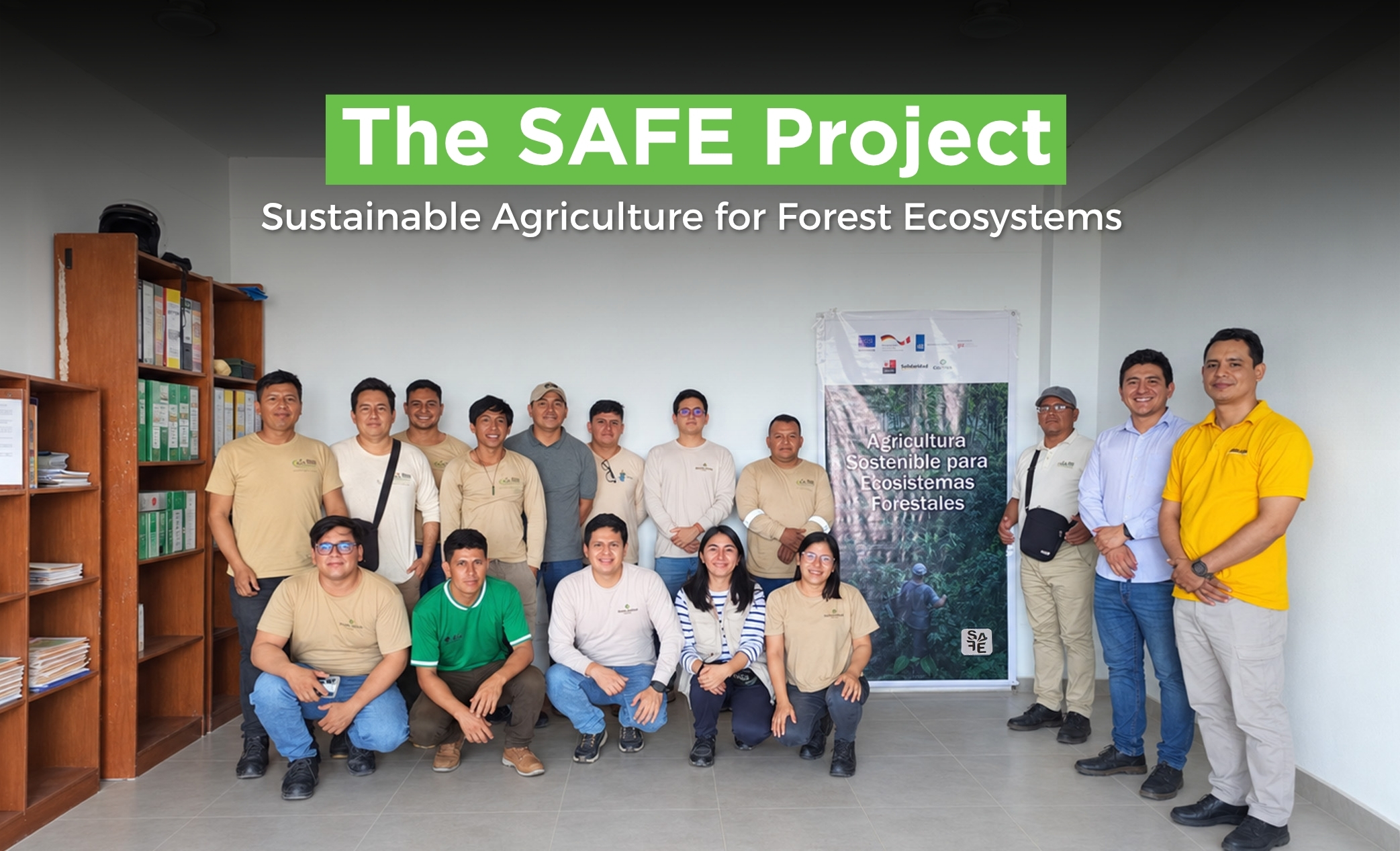
Machu Picchu Foods participates as a partner organization in Project SAFE (Sustainable Agriculture for Forest Ecosystems), an initiative that promotes legal, traceable, and deforestation-free value chains in preparation for the European Union Deforestation Regulation (EUDR).
What is Project SAFE?
SAFE is an international cooperation project that strengthens cocoa cooperatives on their path toward deforestation-free production. Solidaridad leads the implementation of activities aimed at achieving two goals: deforestation-free production and stronger cooperative organizations.
The work takes place in Ucayali, Huánuco, Pasco, and Junín, with an implementation period running from June 2025 to September 2027.
A partnership to strengthen the value chain
Through a collaboration agreement with Solidaridad, running from September 1, 2025, to October 31, 2027 (26 months), Machu Picchu Foods works alongside the organization to strengthen the cocoa value chain. The collaboration focuses on training technical advisors and producers, with sustainable, deforestation-free production aligned with the EUDR as its guiding objective.
The agreement is structured around four pillars that guide activities in the field:
- Capacity building
- Sustainable production
- Compliance with international market requirements
- Ongoing technical assistance
Fieldwork initiatives
Each pillar translates into concrete actions with producers and organizations. The initiative combines several complementary areas of work:
- Integrated Pest Management (IPM) in cocoa cultivation.
- Silvicultural management in agroforestry systems (AFS).
- EUDR requirements and due diligence to prepare producers and organizations for European market requirements.
- Kallpa Program, which promotes local leadership and includes the “Lead with Your Own Voice” training program for women leaders in the cocoa sector.
- Cultivate, a platform offering free courses on sustainable production, climate-smart agriculture, and zero deforestation.
These initiatives complement one another: cultivation techniques, regulatory knowledge, and local leadership advance together to help producers and cooperatives prepare for increasingly demanding international markets.
Field results in 2026
Collaborative work across these territories is already delivering tangible progress:
- 68 people trained (47 men and 21 women) during the current cycle. Women account for approximately 31% of participants.
- 2,668.97 hectares georeferenced across 1,220 plots, averaging approximately 2.2 hectares per plot. This information provides a foundation for traceability and EUDR due diligence.
- 20 free courses available on the Cultivate platform.
Every georeferenced plot strengthens the traceability database, and every person trained brings additional knowledge to the region.
A commitment that continues to grow through 2027
The next steps offer an opportunity to expand traceability, protect forests, and help producers access international markets with high standards. Every hectare protected and every producer trained represents a step toward meaningful change.
“`
& NEWS