October 22, 2026
Cocoa Varieties: Discover Their Characteristics and Flavor Profiles
Cocoa is the foundation of a wide variety of flavor and aroma profiles that give chocolate its identity. Its characteristics vary according to genetics, origin and processing influencing the sensory qualities of the raw material and the possibilities it offers for chocolate production.
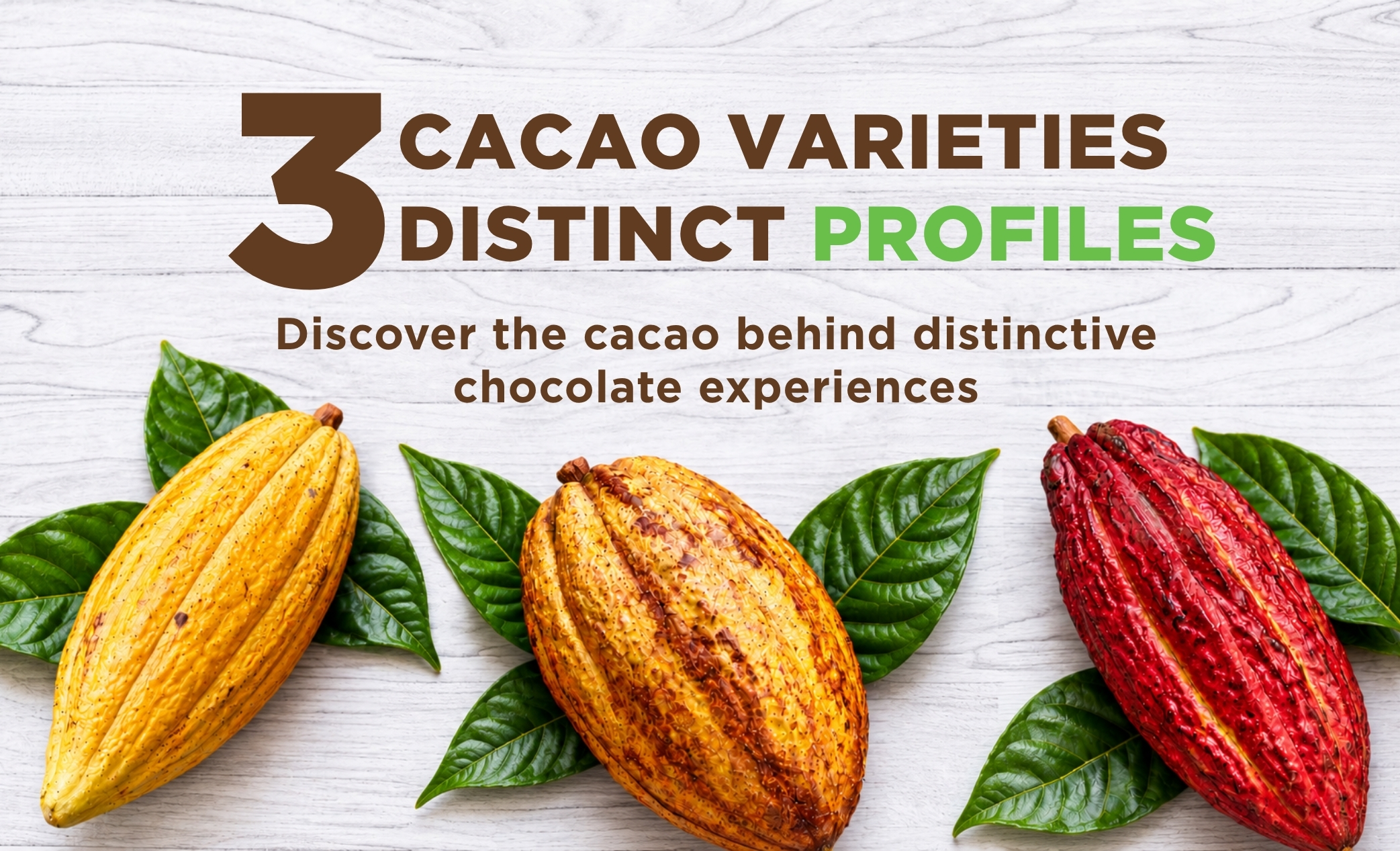
At Machu Picchu Foods, we work with different cocoa varieties, including Trinitario, Forastero, and Criollo. Understanding their characteristics helps us appreciate the diversity of this raw material and its importance in the chocolate industry.
Trinitario Cocoa
Trinitario cocoa is a hybrid group that combines characteristics of Criollo and Forastero. It stands out for its genetic diversity and its potential to develop different aromatic profiles.
Key characteristics:
- Sensory profile: may feature fruity, floral, and spicy notes, depending on its origin and processing.
- Flavor balance: some profiles combine cocoa notes with delicate aromatic nuances.
- Genetic variability: its characteristics may vary depending on the genetic material and growing conditions.
This diversity highlights the range of sensory profiles that Trinitario cocoa can offer.
Forastero Cocoa
Forastero encompasses cocoa groups widely cultivated across different growing regions and represents a significant share of the world’s cocoa supply. It is characterized by its diversity and the cocoa flavor profiles it can contribute.
Key characteristics:
- Global presence: widely cultivated in cocoa-producing regions, particularly West Africa and South America.
- Cocoa flavor: may present intense, bitter, and roasted notes, depending on its origin and processing.
- Variety of profiles: its sensory characteristics vary according to genetics, fermentation, drying, and roasting.
- Production significance: plays an important role in supplying the global chocolate industry.
Its widespread cultivation makes Forastero one of the most representative cocoa groups in the chocolate industry.
Criollo Cocoa
Criollo cocoa is recognized for its historical importance and distinctive sensory characteristics. Traditionally, it is associated with delicate aromatic profiles, lower astringency, and notes that may include fruity, floral, and nutty nuances.
Although it accounts for a relatively small share of global cocoa production, its genetic diversity and sensory attributes make it a particularly interesting group.
Key characteristics:
- Aromatic profile: may feature delicate and complex aromas.
- Flavor: is often associated with lower astringency and less pronounced bitterness.
- Bean characteristics: some varieties have light-colored cotyledons, although color depends on genetics.
- Historical value: is one of the cocoa groups traditionally associated with fine chocolate production.
Its characteristics highlight cocoa’s genetic diversity and its influence on chocolate’s sensory profiles.
Cocoa Diversity in the Chocolate Industry
Each cocoa type has distinctive characteristics that contribute to the diversity of aromas, flavors, and other qualities of this raw material. The final profile also depends on factors such as origin, growing conditions, fermentation, drying, and roasting.
At Machu Picchu Foods, our knowledge of cocoa is an integral part of our chocolate production expertise. We work with raw materials that allow us to meet the needs of the food industry, supported by our experience in formulation, quality control, and production.
Would you like to explore our chocolate and snack solutions?
& NEWS